5 Best Project Management Software for Freelancers (2026)
Managing an independent service business means realizing that production is only half the battle. You can be the most talented web developer, graphic designer, or copywriter in your niche, but if your delivery pipeline is chaotic, your business will struggle. Perekrut and premium clients don’t just pay for your raw skills—they pay for reliability, clear milestones, and strict deadline execution.
When you are juggling four or five concurrent client accounts, running your business out of your email inbox or paper sticky notes is a direct path to burnout. You inevitably misplace crucial revision assets, miss a launch date, or fall victim to extreme scope creep—doing hours of unpaid micro-tasks because the parameters weren’t clearly documented.
The best project management software for freelancers eliminates this operational friction. Rather than forcing you to jump between independent apps, these specialized digital workspaces centralize your action items, host your assets, track your billable execution hours, and allow you to share crystal-clear roadmaps with external clients.
We independently evaluated the top platform tools on the market across interface agility, task customization, native tracking features, and real-world value for solo independent operators. Here is our definitive guide for 2026.
Quick Answer: The Top Freelancer Project Workspaces Compared
If you are actively onboarding a new client today and need to instantly build a structured deliverable path, here is our high-level editorial summary:
-
Best Overall for Complex Workflows: ClickUp (The most adaptable, feature-rich powerhouse featuring built-in time tracking and multi-view flexibility).
-
Best for Content & Documentation: Notion (Outstanding if your work relies on linking deep text drafts, research hubs, and visual project wikis).
-
Best for Operations Integration: Plutio (A superb all-in-one environment built explicitly to link project tasks directly to contracts and client invoicing).
-
Best for Minimalist Speed: Todoist (The ultimate frictionless task-capture companion for solo generalists who hate complex configurations).
The Over-Engineering Trap: Why Enterprise PM Tools Fail Solo Operators
The most common mistake independent professionals make is downloading highly complex enterprise platforms like corporate Jira configurations or high-tier Monday.com team templates because major corporations use them.
These heavy tools are engineered for massive cross-functional corporations. They are built to manage resource allocation across 50-person departments, handle complex agile sprint velocities, and feed advanced statistical performance dashboards to corporate stakeholders.
For a solo freelancer, these architectures introduce severe software overhead. You end up spending more time clicking checkboxes, mapping artificial corporate dependencies, and debugging complex database views than actually generating real billable value for your clients. Freelancers require a lean, fast layout: a platform that lets you open a window, capture a task, track your execution time, and get out of the way.
In-Depth Reviews: The 5 Best Project Management Software for Freelancers
1. ClickUp – Best Overall All-in-One Powerhouse for Complex Phased Work
ClickUp is the absolute feature-heavy champion for active independent service professionals who need structural flexibility. It positions itself as the “one app to replace them all,” and for freelancers running intricate multi-stage projects, it delivers exactly that.
-
Who It Is Best For: Web developers, technical product managers, digital agencies, and designers running complex, phased production loops (like full product launches or website builds).
-
Main Strengths: Its native time tracking engine is an elite asset—allowing you to log hours directly against specific micro-tasks and export report strings without purchasing a separate Toggl subscription. It provides 15+ highly customizable visual layouts (Kanban, List, Gantt, and Mind Maps), a generous free tier that covers unlimited tasks, and an intuitive AI assistant to summarize client brief logs.
-
Important Limitations: The massive breadth of custom settings can feel completely overwhelming during your first few hours of initial setup.
-
Pricing Context: A highly capable free tier is available. Premium plans begin at an accessible ~$7 per user per month when billed annually, which unlocks advanced automation rules.
2. Notion – Best for Knowledge-Led Freelancers, Writers, & Client Wikis
Notion treats project management as an extension of document collaboration. Rather than isolating tasks into clinical spreadsheets, it functions as a highly text-adaptable canvas where records, ideas, and strategies exist side-by-side.
-
Who It Is Best For: Copywriters, content strategists, journalists, ghostwriters, and independent researchers who want their project tasks attached directly to their written output.
-
Main Strengths: The unmatched ability to build read-only “Client Portals” or project wikis. A single custom page can hold a project overview brief, an open document checklist, active copy drafts, and a delivery timeline. Clicking “Share” lets your client view your progress in real time, entirely killing off messy check-in email chains.
-
Important Limitations: It lacks any built-in, native automatic time tracking clocks or financial invoicing modules; building automated tracking loops requires manual setup or external API hooks.
-
Pricing Context: Highly functional free plan for individual use. Custom Notion AI integrations or advanced team sharing spaces start around $8 to $10 per month.
3. Plutio – Best Single Hub for Blending Projects with Freelance Operations
If your ultimate goal is running your independent business out of a single tab rather than maintaining distinct apps for project work, pipeline tracking, and billing, Plutio offers an exceptional all-in-one architecture.
-
Who It Is Best For: Freelance consultants and independent contractors who want their project milestones to trigger automated administrative events.
-
Main Strengths: Superb operational integration. When a prospective client signs a proposal inside Plutio, the software automatically converts that agreed scope into an active project board pre-populated with task blocks from your custom templates. Once you complete the tasks and clock hours via the built-in timer, you can generate and send a matching invoice with a single click.
-
Important Limitations: The interior template styling options are more clinical and less visually modular than Notion’s blank canvas layouts.
-
Pricing Context: Specialized solo tier structures begin around $19 per month, offering great value by replacing multiple independent SaaS apps.
4. Trello – Best Lightweight Kanban Solution for High-Visual Speed
Trello popularized the classic card-based Kanban framework, and its focus remains locked on absolute visual simplicity.
-
Who It Is Best For: Solo generalist freelancers, social media managers, and creatives handling fewer than five active client tracks who want to see their workload at a glance.
-
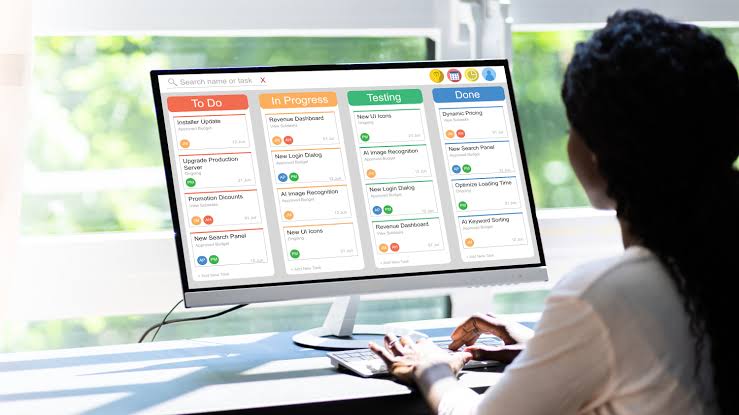
Main Strengths: Ultimate ease of use. You build a columns board per client, map tasks into separate cards, and drag them across clear operational stages (e.g., To Do, In Progress, Awaiting Feedback, Approved). There is zero training time required, and its “Power-Ups” marketplace allows quick integrations with Slack, Figma, and Google Drive.
-
Important Limitations: Features become highly limited when attempting to build multi-tiered project dependencies, sub-task structures, or complex analytics databases.
-
Pricing Context: A highly popular free tier permits up to 10 separate client workspace boards. Premium expansions start around $5 per user per month.
5. Todoist – Best Frictionless Task Logger for Solo Generalists
If you find visual boards, timelines, and deep documentation databases a distraction from actual head-down production work, Todoist strips away the noise to deliver an elite digital to-do list.
-
Who It Is Best For: Solo practitioners and independent workers who simply need an ultra-fast, daily priority companion across multiple clients.
-
Main Strengths: Lightning-fast task capture via its advanced natural language processing engine. Typing a string like “Review logo drafts with Sarah every Thursday at 2pm #Design” automatically schedules a recurring task, maps the deadline calendar link, and targets the correct client project folder instantly.
-
Important Limitations: The tool is designed strictly as a personal action log; it does not host interactive public portals for external client participation.
-
Pricing Context: Generous free baseline use. Paid Pro accounts unlock custom filters, reminders, and historical tracking files for a modest ~$4 per month.
Buying Guide: How to Select the Ideal Project Ecosystem for Your Niche
To avoid overpaying or implementing software that introduces unnecessary administrative friction, map your choice to the specific nature of your output:
-
Determine Your Deliverable Shape: If your freelance business model involves complex, technical step dependencies where milestone B cannot begin until milestone A clears a quality review (e.g., full-stack engineering), prioritize feature-heavy workflow layouts (ClickUp or Asana). If your delivery centers on written content, strategy briefs, or knowledge assets, prioritize text-heavy workspace canvases (Notion).
-
Verify the Client Visibility Interface: Analyze how much access your clients demand. If your client base consists of fast-moving startup teams who want regular, passive self-service access to view task updates, pick platforms with excellent read-only public links or guest portal features (Notion or Plutio).
-
Data Portability Autonomy: Always select a software engine that allows you to cleanly back up and export your historical database architecture into standard CSV, Markdown, or JSON formats at any moment. Your past project logs are core professional operational data assets that you must own completely.
The Scope Creep Defense: Using Software to Protect Your Margins
As an independent career researcher and business analyst, I must deliver an explicit structural warning: Project management software is a defensive tool to shield your profitability, not just a colorful to-do log.
The single biggest drain on freelance income is “invisible labor”—minor client requests like “Can you just tweak this font?” or “Could you jump on a quick unscheduled call?” Over the lifecycle of a month-long project, these micro-requests add up, dragging your actual hourly earnings down below minimum wage.
Specialized tracking apps like ClickUp, Notion, or Plutio act as your objective source of truth. When a client requests an asset change that sits outside the signed parameters, you don’t have to enter a tense emotional confrontation.
The Professional Playbook: Simply point them directly to the active project workspace layout. You can state: “I can absolutely execute that update for you. As you can see on our active project timeline board, that falls outside our initial tier-1 checklist milestones. I’ve attached an add-on task block card displaying the adjusted rate and deadline impact for your instant digital approval.”
Final Verdict: Which Freelancer Project Tool Wins?
-
If you want the ultimate, highly flexible powerhouse workspace capable of tracking complex multi-phase developments with native billable hour tracking, choose ClickUp.
-
If you are a writer, creator, or consultant whose workflow demands pairing task tracking directly with rich text client wiki hubs, choose Notion.
-
If you want an all-in-one operations engine that effortlessly links signed client proposals to active task boards and direct invoices, choose Plutio.
Frequently Asked Questions (FAQ)
1. Should I add clients directly into my freelance project board?
For visual, high-collaboration agencies, adding clients as standard guest accounts can streamline file approvals. However, for the majority of solo freelancers, it is safer to share a highly specific, restricted read-only page view (Notion) or an isolated portal (Plutio). This allows clients to view major milestones while shielding your private operational scratchpads and internal time logs from view.
2. Can I use a general team PM tool like Monday.com or Asana for solo work?
Yes, both tools feature solid individual free tiers. However, keep in mind that paid upgrades on platforms like Monday.com frequently enforce minimum user seat policies (e.g., forcing you to purchase a minimum of 3 user seats even if you are a completely solo operator). Specialized independent platforms keep their entry parameters solo-friendly.
3. How long should it take to set up a clean freelancer PM workspace?
Building a functional, lean baseline workspace typically requires 1 to 3 hours of dedicated focus. Spend your initial configuration time mapping your core client folders, customizing standard progress labels, and creating reusable project templates for your primary service packages.
4. Why should I use a dedicated tool instead of standard Google Sheets?
Google Sheets require tedious manual text updates, don’t host automatic email asset attachments cleanly, lack integrated time-tracking stopwatches, and cannot send smart, automatic deadline alerts to your browser. A dedicated career tracking tool automates these tasks, saving you hours of non-billable administrative work every single week.