5 Best Cloud Certifications for Career Changers (2026 Guide)
The modern employment landscape is undergoing a massive structural shift. Traditional, single-industry corporate paths are fading out, while companies across every global sector are heavily prioritizing digital transformation. As a result, cloud computing literacy has transformed from an isolated IT specialty into a universal high-value business standard.
If you are currently looking to execute a major career pivot out of hospitality, retail, administration, or traditional operations, cloud infrastructure provides one of the fastest, most reliable pathways into a higher salary tier.
However, searching for training online creates a frustrating bottleneck. The educational market is completely saturated with surface-level tutorials that fail to impress real hiring managers.
To successfully break through modern HR screening algorithms, you need an industry-recognized cloud certification built for career changers. You need a credential path that assumes zero prior coding or networking background, teaches you the exact cloud services global enterprises look for, and provides an on-ramp to build a tangible project portfolio.
We independently evaluated the top beginner-friendly cloud programs on the market across recruitment keyword demand, architectural scope, ease of use for non-tech professionals, and overall career return on investment (ROI). Here is our definitive guide.
At a Glance: The Top Career-Pivot Cloud Tracks Compared
If you have an upcoming transition timeline and want to deploy a highly credible resume anchor right now, here is our top-level strategic summary:
-
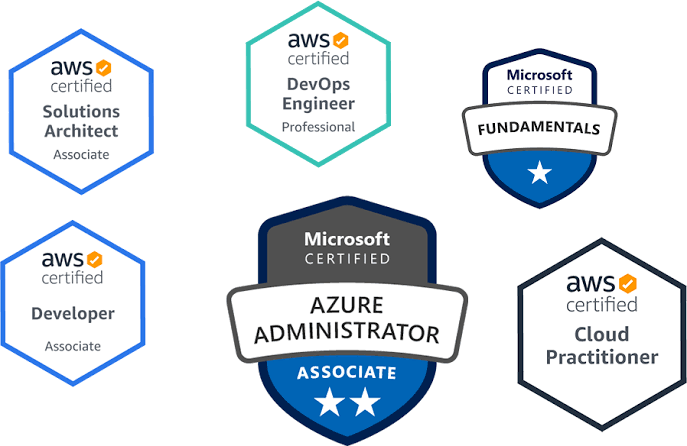
Best Overall for Recruiting Visibility: AWS Certified Solutions Architect – Associate (The absolute industry gold standard globally; widely recognized by hiring teams for entry-to-mid cloud engineering roles).
-
Best for True Absolute Beginners: AWS Certified Cloud Practitioner (CLF-C02) (The premier budget-friendly, conceptual starting point to learn the foundational vocabulary of cloud ecosystems safely).
-
Best for Corporate Enterprise Environments: Microsoft Certified: Azure Fundamentals (AZ-900) (Outstanding if your target companies are heavily anchored inside Windows and Microsoft 365 environments).
-
Best for Business & Strategy Switchers: Google Cloud Digital Leader (The top alternative for non-technical beginners looking to pivot into Cloud Project Management or tech sales tracks).
The Cloud Pivot Strategy: A Certification Alone Will Not Save You
The single biggest mistake career switchers make is treating a cloud certification like a magical passport to a six-figure salary. A multiple-choice exam simply proves you can memorize acronyms and pass a test; it does not prove you can handle live production architecture when a system experiences an outage.
To secure entry-level interviews in today’s highly competitive tech sector, your technical capability profile must cleanly bridge foundational theory and practical, event-driven execution. Your cloud learning journey should look like a progressive, multi-layered lifecycle:
┌────────────────────────────────────────────────────────┐
│             Tier 1: Foundational Literacy             │
│   (AWS Cloud Practitioner or Azure Fundamentals)       │
└────────────────────────┬───────────────────────────────┘
                         │
                         ▼
┌────────────────────────────────────────────────────────┐
│            Tier 2: Cloud Hands-On Project              │
│ (Build a Cloud Resume: deploy HTML via S3 / CloudFront)│
└────────────────────────┬───────────────────────────────┘
                         │
                         ▼
┌────────────────────────────────────────────────────────┐
│             Tier 3: Infrastructure-as-Code             │
│   (Learn baseline Linux & automate setups via Terraform)│
└────────────────────────┬───────────────────────────────┘
                         │
                         ▼
┌────────────────────────────────────────────────────────┐
│             Tier 4: Core Associate Cert                │
│ (AWS Solutions Architect or Azure Admin Associate)      │
└────────────────────────────────────────────────────────┘
By pairing a core certification with a public, functional digital project (such as hosting a secure website via cloud servers or automating backups using simple scripting), your resume instantly stands out from applicants who only display raw badges.
In-Depth Reviews: The 5 Best Cloud Certifications for Career Changers
1. AWS Certified Solutions Architect – Associate (SAA-C03) – Best Overall for Job Seekers
If your primary objective is maximizing your immediate market value and catching the attention of tech recruiters, the AWS Solutions Architect – Associate is the single most valuable credential you can secure.
-
Who It Is Best For: Ambitious career changers willing to dedicate 2 to 3 months of focused study to target junior cloud engineer, technical support associate, or cloud consultant roles.
-
Main Strengths: Massive industry demand. Amazon Web Services (AWS) holds the largest global cloud infrastructure market share. This proctored exam validates your practical ability to design, deploy, and secure distributed business applications across compute, storage, networking, databases, and cost optimization layers.
-
Important Limitations: It is a rigorous, intermediate-level tech exam. Absolute beginners should study foundational concepts before taking this course.
-
Pricing Context: A single proctored testing registration voucher costs a standard fee of $150.
2. AWS Certified Cloud Practitioner (CLF-C02) – Best Entry-Level On-Ramp
For true career changers who feel completely overwhelmed by technical jargon and want a gentle, low-cost introduction to the tech sector, the AWS Cloud Practitioner is the ultimate starting point.
-
Who It Is Best For: Complete beginners from non-IT backgrounds who need to learn foundational terminology before advancing to technical engineering tracks.
-
Main Strengths: High accessibility. The course focuses purely on core cloud concepts, the shared security responsibility model, primary service frameworks, billing models, and basic AI structures. Passing this foundational tier awards a valuable 50% discount voucher code toward your next advanced AWS associate exam.
-
Important Limitations: On its own, this cert rarely leads to an interview for a complex engineering or platform operations role. Treat it as a structural stepping stone.
-
Pricing Context: Highly affordable foundational exam registration sitting at a fixed standard fee of $100.
3. Microsoft Certified: Azure Fundamentals (AZ-900) – Best for Corporate Office Environments
If you are pivoting out of an administrative, financial, or healthcare service track where the companies around you live inside the traditional Windows corporate suite, Microsoft Azure Fundamentals is a highly effective option.
-
Who It Is Best For: Corporate career switchers looking to pivot into junior tech systems support, data specialist, or software sales roles within Microsoft-centric firms.
-
Main Strengths: Excellent baseline integration. Microsoft Azure holds the second-largest global cloud market share and is growing rapidly inside enterprise organizations. The AZ-900 introduces you to core virtual networking, hybrid infrastructure models, identity access policies, and fundamental AI cloud services beautifully.
-
Important Limitations: Similar to the AWS Cloud Practitioner, it is a non-technical foundational cert that should be paired with an associate-level follow-up to optimize hiring chances.
-
Pricing Context: Highly cost-accessible foundational entry fee sitting at a standard $99.
4. Google Cloud Digital Leader – Best for Non-Technical Business Roles
Google Cloud Platform (GCP) has carved out a massive corporate niche by leading the market in advanced data analytics, machine learning tools, and modern container orchestration.
-
Who It Is Best For: Career changers targeting business-oriented tech roles—such as Cloud Product Managers, Technical Recuiter screeners, or Technology Account Executives.
-
Main Strengths: 100% code-free and strategy-driven. Instead of drilling down into command-line syntax or network subnetting configurations, this digital credential focuses entirely on teaching you how cloud technology solves real-world corporate business problems, tracks digital modernization costs, and drives business innovation.
-
Important Limitations: Highly high-level and strategic, meaning it will not prepare you to configure network hardware or execute infrastructure upgrades.
-
Pricing Context: Standard foundational registration voucher sitting around $99.
5. Microsoft Certified: Azure Administrator Associate (AZ-104) – Best for Heavy Infrastructure Operations
For career switchers with a baseline familiarity with basic tech support who want a highly operational role running the digital plumbing of major enterprise networks, the AZ-104 is a heavyweight credential.
-
Who It Is Best For: Technical career switchers aiming for immediate, highly sought-after roles as Azure System Administrators or Cloud Operations Specialists.
-
Main Strengths: High resume authority. There are zero formal prerequisites to sit the test. Passing this intermediate exam proves to an enterprise employer that you can confidently manage global subscriptions, provision virtual compute machines, configure deep virtual networks, and secure active directory identities smoothly.
-
Important Limitations: The exam is highly technical, detailed, and carries a notoriously rigorous configuration scenario framework.
-
Pricing Context: Standard associate-level testing registration voucher fee.
Buying Guide: How to Align Your Cloud Path with Job Requirements
To protect your learning hours and ensure your educational budget translates into real corporate interviews, evaluate your path using this strategic grid:
-
Select by Market Share Dominance: If you have no geographic preference, prioritize AWS certifications due to their absolute dominance across the global startup and general cloud marketplace. If your regional market is heavily built around traditional corporate services, financial banking hubs, or massive government agencies, prioritize Microsoft Azure paths.
-
Insist on a Mandatory Lab Component: Avoid any online boot camp that teaches cloud concepts exclusively via boring, slide-deck videos. Choose learning environments that integrate hands-on sandbox cloud labs. Actually clicking through the real AWS or Azure portal to configure a virtual network is how real technical confidence is built.
-
Leverage AI for Syntax and Error Aggregations: When you step into your practical portfolio building phase, do not let technical scripts (like basic terminal coding or configuration frameworks) intimidate you. Senior cloud practitioners continuously use generative AI assistants safely to help interpret complex log errors, format automated scripts, and summarize service configurations quickly, freeing your energy to focus on high-level systems layout logic.
The Strategic Balance: The Logic Layer Wins the Tech Interview
As a veteran systems analyst and technology career coach, I must deliver an upfront reality check: Cloud computing fluency means knowing how technical infrastructure shields corporate margins, not just knowing where to click in a software dashboard.
The single biggest mistake career switchers make in technical interviews is describing system elements purely in clinical isolation (e.g., “I know how to provision a database”). A hiring manager at an elite firm wants to see business alignment and systems logic.
When you construct your project portfolios or answer behavioral panel interview loops, frame your insights like a strategic corporate brief. Explicitly link your cloud architecture choices to real business impacts:
“I configured this project across multiple global regions not just to secure high availability, but explicitly to minimize system down-time metrics. By automating auto-scaling rules, I ensured the business avoids lighting capital on fire during traffic drops, automatically protecting corporate margins.”
Mastering that line of operational business reasoning is what truly separates you from the competition and establishes your authority as an indispensable asset for your future employer.
Final Verdict: Which Cloud Certification Earns Your Pivot?
-
If you want the absolute ultimate, most globally recognized associate credential to maximize your keyword match rates on your resume and win tech engineering interviews, choose AWS Certified Solutions Architect – Associate.
-
If you are an absolute beginner starting from zero IT history who wants a low-cost foundational introduction to learn cloud terminology, choose AWS Certified Cloud Practitioner.
-
If your target geographic market is dominated by traditional enterprise corporations and you want a clean, fundamental path inside Windows environments, choose Microsoft Azure Fundamentals.
Frequently Asked Questions (FAQ)
1. Can I get a cloud computing job without a formal degree in computer science?
Yes, absolutely. The cloud infrastructure sector is heavily capability-driven rather than academic-driven. By pairing a recognized associate-level certification with a strong public portfolio showcasing real, working cloud applications, career switchers consistently break past screening filters and secure entry-level technical positions.
2. What is the core structural difference between AWS, Azure, and Google Cloud?
Amazon Web Services (AWS) is the oldest global giant, dominating startups and wide commercial applications. Microsoft Azure focuses heavily on hybrid frameworks, enterprise architecture, and corporate legacy systems. Google Cloud Platform (GCP) specializes heavily in high-performance big data analytics, machine learning, and Kubernetes container management.
3. How long does a career switcher typically require to pass an associate cloud exam?
For candidates coming from completely non-technical backgrounds who dedicate roughly 10 to 15 hours of focused, structured study per week, successfully preparing for an intermediate exam like the AWS Solutions Architect – Associate generally requires 3 to 4 months of continuous effort.
4. What is the baseline entry-level salary expectation for cloud practitioners?
According to general digital tracking markers, entry-level cloud support associates, junior cloud technicians, and cloud billing coordinators typically see baseline salary offerings spanning $55,000 to $85,000 depending entirely on regional market geography and adjacent professional background alignment.